Kangning Cui

Research Themes

Publications, preprints, and conference abstracts are grouped below. Preprints are labeled explicitly; patents are listed separately. Updated 25 October 2026.

Efficient & Reliable ML

Language and generative models: compression, inference, reliability, and representations.

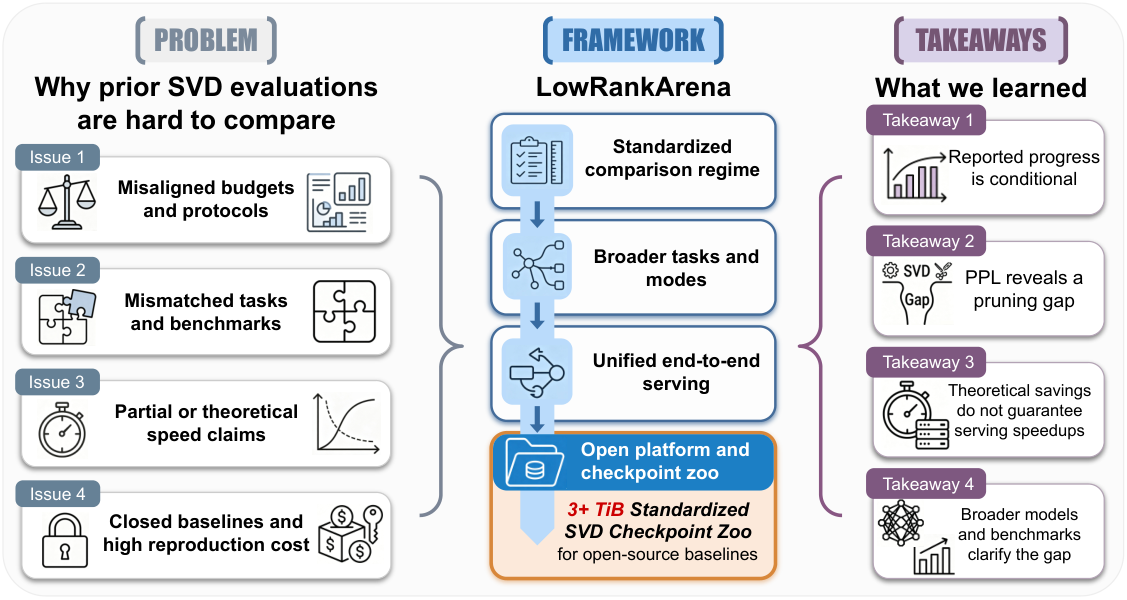
  • Compression & inference. LowRankArena, FlashSVD, and BudgetDraft study compression quality, practical speed, and efficient decoding.
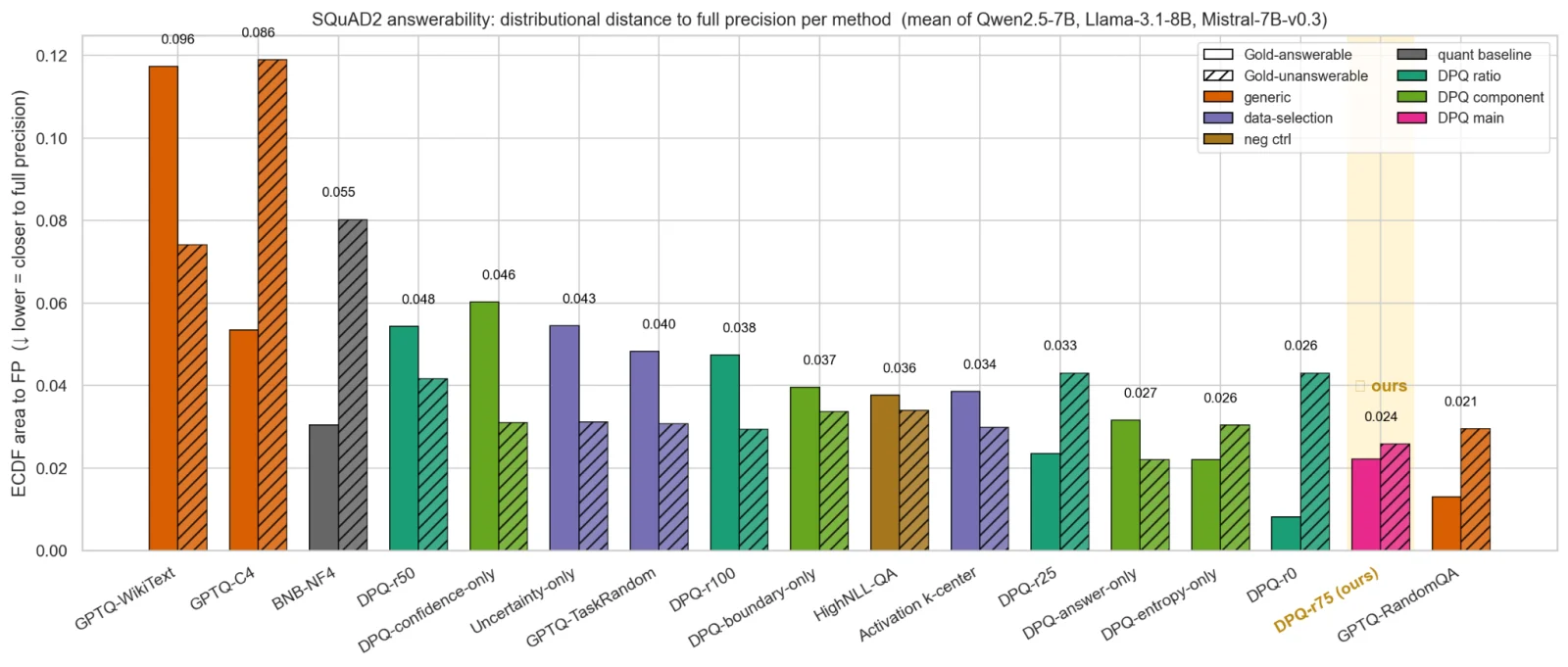
  • Reliability & agents. DPQ preserves uncertainty after quantization; related work examines agent decisions and execution utility.
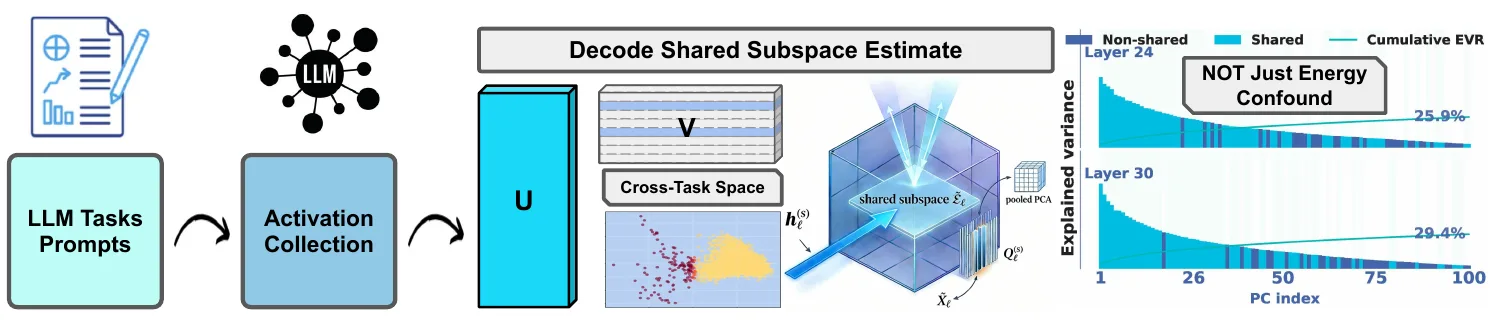
  • Representations. DecodeShare studies shared decoding subspaces, alongside visual generation and graph community learning.
Publications & preprints (13)

Compression & efficient inference

Reliability, agents & representations

Structured learning

Geospatial AI

Remote sensing and visual learning for forests, agriculture, and biodiversity.

Explore the Geospatial AI project
  • Forests & environmental change. PRISM and PalmDSNet map canopy palms; ELDOR supports monitoring of illegal gold mining.
  • Field vision. Lightweight detection models support crop phenotyping, pest recognition, and biodiversity monitoring.
  • Learning without labels. S2DL uses superpixels and diffusion geometry for efficient hyperspectral clustering.
Publications & preprints (28)

Forest mapping & environmental change

Remote sensing & hyperspectral learning

Agriculture & biodiversity

Medical AI

Temporal structure in biomedical images and signals.

Related medical AI patents
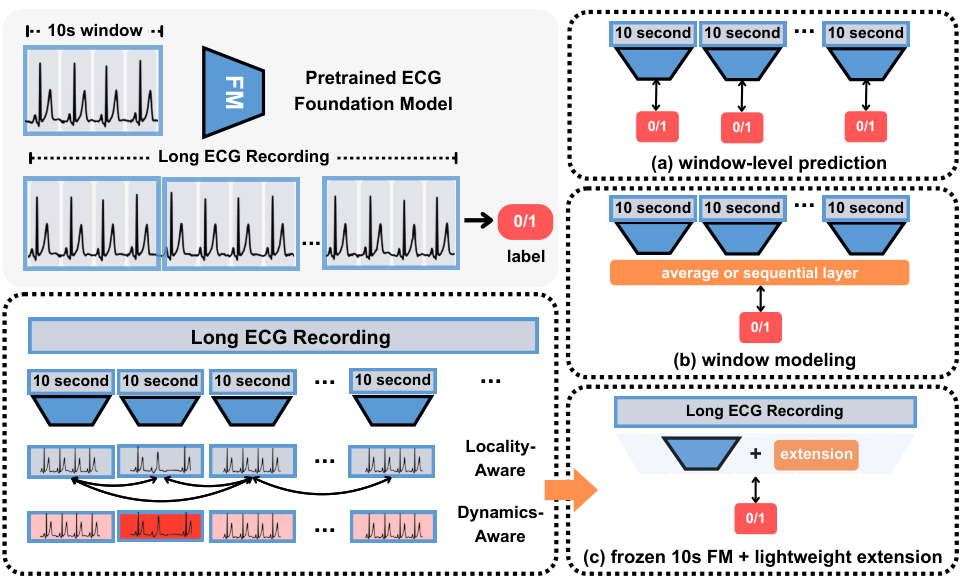
  • Efficient adaptation. Long-horizon ECG models extend frozen 10-second backbones to variable-length recordings.
  • Annotation-free analysis. Cardiac motion profiling identifies cardiac phases in adult and fetal echocardiography.
  • Collaborative applications. Ultrasound restoration and tracking, biomedical signal analysis, and cell segmentation.
Publications & preprints (7)

Cardiac images & signals

Cell & retinal imaging

Research in the Media

Environmental monitoring and sustainable development, through feature journalism and broadcast coverage.

NBC News coverage image from Paradise Lost
NBC NewsNov 22, 2022

Paradise Lost

Monitoring environmental change

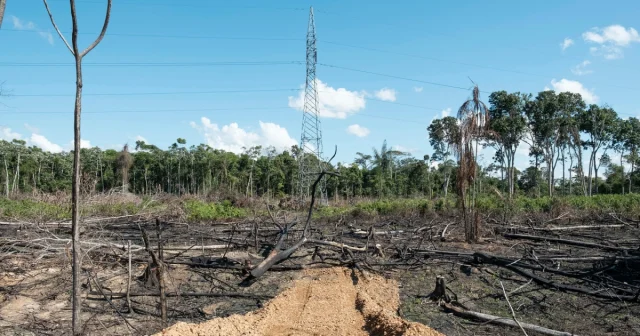
Reporting on illegal gold mining in Peru’s Amazon and the role of AI-assisted environmental monitoring.

Read the investigation

Selected Journal Publications

Center-guided Classifier for Semantic Segmentation of Remote Sensing Images[TGRS'26]

Wei Zhang, Mengting Ma, Yizhen Jiang, Yun Chen, Zhenhua Huang, Wangyu Wu, Kangning Cui, Rongrong Lian, Zhenkai Wu, and Xiaowen Ma*

Paper PDF (preprint) Preprint Code
BibTeX
@article{zhang2026centerseg,
  author = {Zhang, Wei and
            Ma, Mengting and
            Jiang, Yizhen and
            Chen, Yun and
            Huang, Zhenhua and
            Wu, Wangyu and
            Cui, Kangning and
            Lian, Rongrong and
            Wu, Zhenkai and
            Ma, Xiaowen},
  title = {Center-Guided Classifier for Semantic Segmentation of Remote Sensing Images},
  journal = {{IEEE} Transactions on Geoscience and Remote Sensing},
  year = {2026},
  volume = {64},
  pages = {1--16},
  publisher = {Institute of Electrical and Electronics Engineers (IEEE)},
  doi = {10.1109/tgrs.2026.3657453},
  url = {https://doi.org/10.1109/tgrs.2026.3657453},
}
Details
Figure for CenterSeg

Abstract

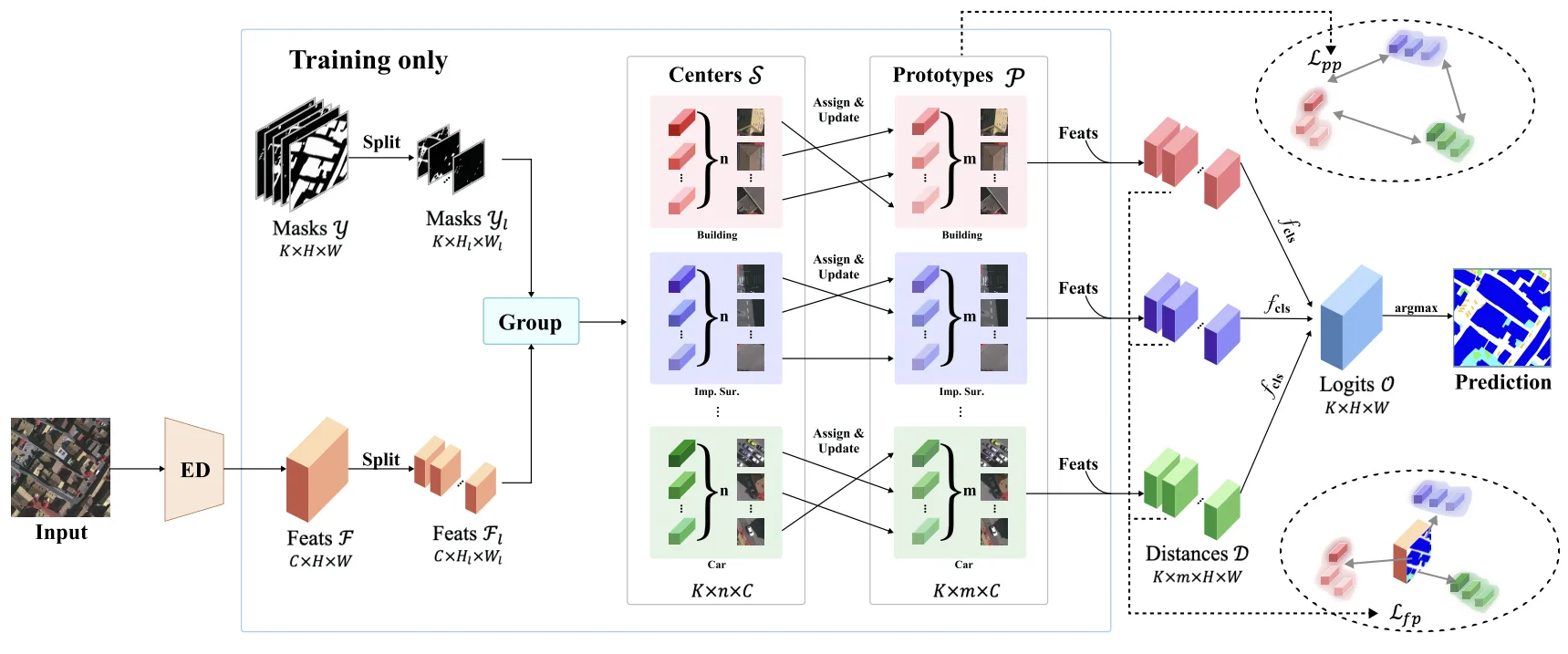
Compared with natural images, remote sensing images (RSIs) have the unique characteristic, i.e., larger intraclass variance, which makes semantic segmentation for remote sensing images more challenging. Moreover, existing semantic segmentation models for remote sensing images usually employ a vanilla softmax classifier, which has three drawbacks: (1) non-direct supervision for the pixel representations during training; (2) inadequate modeling ability of parametric softmax classifiers under large intraclass variance; and (3) opaque process of classification decision. In this paper, we propose a novel classifier (called CenterSeg) customized for RSI semantic segmentation, which solves the abovementioned problems with multiple prototypes, direct supervision under Grassmann manifold, and interpretability strategy. Specifically, for each class, our CenterSeg obtains local class centers by aggregating corresponding pixel features based on ground-truth masks, and generates multiple prototypes through hard attention assignment and momentum updating. In addition, we introduce the Grassmann manifold and constrain the joint embedding space of pixel features and prototypes based on two additional regularization terms. Especially, during the inference, CenterSeg can further provide interpretability to the model by restricting the prototype as a sample of the training set. Experimental results on three remote sensing segmentation datasets validate the effectiveness of the model. Besides the superior performance, CenterSeg has the advantages of simplicity, lightweight, compatibility, and interpretability.

Efficient Localization and Spatial Distribution Modeling of Canopy Palms Using UAV Imagery[TGRS'25]

Kangning Cui†,*, Wei Tang†, Rongkun Zhu, Manqi Wang, Gregory D. Larsen, Victor P. Pauca, Sarra Alqahtani, Fan Yang, David Segurado, Paul Fine, Jordan Karubian, Raymond H. Chan, Robert J. Plemmons, Jean-Michel Morel, and Miles R. Silman

Paper PDF (preprint) Preprint Dataset Code
BibTeX
@article{cui2025palmstgrs,
  author = {Cui, Kangning and
            Tang, Wei and
            Zhu, Rongkun and
            Wang, Manqi and
            Larsen, Gregory D. and
            Pauca, Victor P. and
            Alqahtani, Sarra and
            Yang, Fan and
            Segurado, David and
            Fine, Paul and
            Karubian, Jordan and
            Chan, Raymond H. and
            Plemmons, Robert J. and
            Morel, Jean-Michel and
            Silman, Miles R.},
  title = {Efficient Localization and Spatial Distribution Modeling of Canopy Palms Using {UAV} Imagery},
  journal = {{IEEE} Transactions on Geoscience and Remote Sensing},
  year = {2025},
  volume = {63},
  pages = {1--15},
  publisher = {Institute of Electrical and Electronics Engineers (IEEE)},
  doi = {10.1109/tgrs.2025.3584093},
  url = {https://doi.org/10.1109/tgrs.2025.3584093},
}
Details
PalmDSNet workflow: UAV imagery, palm detection, segmentation, counting, and saliency maps

Abstract

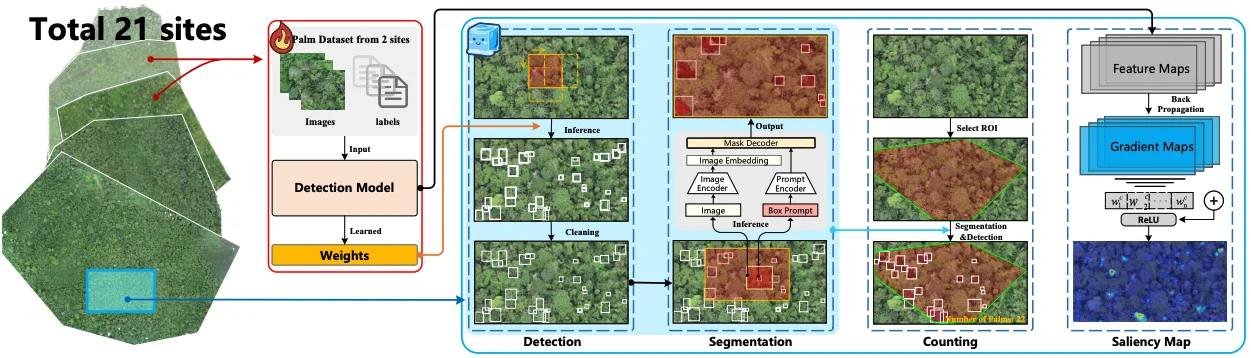
Understanding the spatial distribution of palms in tropical forests is essential for ecological monitoring, conservation strategies, and the sustainable integration of natural forest products into local and global supply chains. However, the analysis of remotely sensed data are challenged by overlapping palm and tree crowns, uneven shading across the canopy surface, and the heterogeneous nature of the forest landscapes, which often affect the performance of palm detection and segmentation algorithms. To overcome these issues, we introduce PalmDSNet, a deep learning framework for efficient detection, segmentation, and counting of canopy palms. To model spatial patterns, we introduce a bimodal reproduction algorithm that simulates palm propagation based on PalmDSNet outputs. We used UAV-captured imagery to create orthomosaics from 21 sites across western Ecuadorian tropical forests, covering a gradient from the everwet Choco forests near Colombia to the drier forests of southwestern Ecuador. Expert annotations were used to create a comprehensive dataset, including 7,356 bounding boxes on image patches and 7,603 palm centers across five orthomosaics, encompassing a total area of 449 hectares. By integrating detection and spatial modeling, we effectively simulate the spatial distribution of palms in diverse and dense tropical environments, validating its utility for advanced applications in tropical forest monitoring and remote sensing analysis. The dataset can be accessed at 10.5281/zenodo.13822508, and the code to replicate the study is available at github.com/ckn3/palm-ds-sp.

Superpixel-based and Spatially-regularized Diffusion Learning for Unsupervised Hyperspectral Image Clustering[TGRS'24]

Kangning Cui†,*, Ruoning Li, Sam L. Polk, Yinyi Lin, Hongsheng Zhang, James M. Murphy, Robert J. Plemmons, and Raymond H. Chan

Paper PDF (preprint) Preprint Code
BibTeX
@article{cui2024s2dl,
  author = {Cui, Kangning and
            Li, Ruoning and
            Polk, Sam L and
            Lin, Yinyi and
            Zhang, Hongsheng and
            Murphy, James M. and
            Plemmons, Robert J. and
            Chan, Raymond H.},
  title = {Superpixel-Based and Spatially Regularized Diffusion Learning for Unsupervised Hyperspectral Image Clustering},
  journal = {{IEEE} Transactions on Geoscience and Remote Sensing},
  year = {2024},
  volume = {62},
  pages = {1--18},
  publisher = {Institute of Electrical and Electronics Engineers (IEEE)},
  doi = {10.1109/tgrs.2024.3385202},
  url = {https://doi.org/10.1109/tgrs.2024.3385202},
}
Details
S2DL workflow: hyperspectral data, superpixels, diffusion geometry, and clustering without labels

Abstract

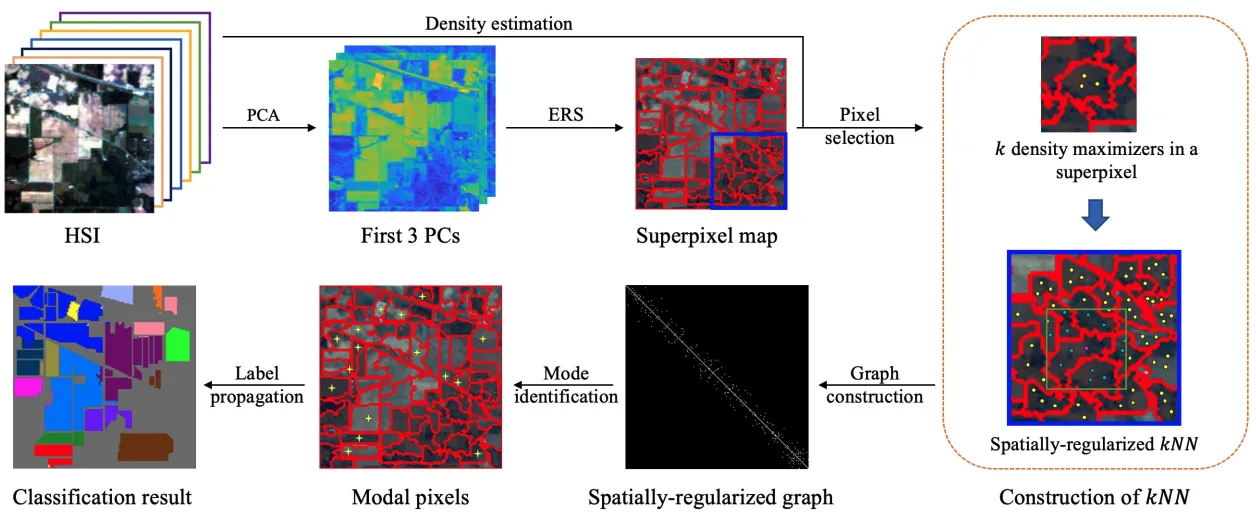
Hyperspectral images (HSIs) provide exceptional spatial and spectral resolution of a scene, crucial for various remote sensing applications. However, the high dimensionality, presence of noise and outliers, and the need for precise labels of HSIs present significant challenges to the analysis of HSIs, motivating the development of performant HSI clustering algorithms. This paper introduces a novel unsupervised HSI clustering algorithm, Superpixel-based and Spatially-regularized Diffusion Learning (S2DL), which addresses these challenges by incorporating rich spatial information encoded in HSIs into diffusion geometry-based clustering. S2DL employs the Entropy Rate Superpixel (ERS) segmentation technique to partition an image into superpixels, then constructs a spatially-regularized diffusion graph using the most representative high-density pixels. This approach reduces computational burden while preserving accuracy. Cluster modes, serving as exemplars for underlying cluster structure, are identified as the highest-density pixels farthest in diffusion distance from other highest-density pixels. These modes guide the labeling of the remaining representative pixels from ERS superpixels. Finally, majority voting is applied to the labels assigned within each superpixel to propagate labels to the rest of the image. This spatial-spectral approach simultaneously simplifies graph construction, reduces computational cost, and improves clustering performance. S2DL’s performance is illustrated with extensive experiments on four publicly available, real-world HSIs: Indian Pines, Salinas, Salinas A, and WHU-Hi. Additionally, we apply S2DL to landscape-scale, unsupervised mangrove species mapping in the Mai Po Nature Reserve, Hong Kong, using a Gaofen-5 HSI. The success of S2DL in these diverse numerical experiments indicates its efficacy on a wide range of important unsupervised remote sensing analysis tasks.

Selected Conference Publications

LowRankArena: A Standardized Evaluation Platform for SVD-Based LLM Compression[NeurIPS'26, ED Track, Poster]

Zishan Shao†, Lixun Zhang†, Kangning Cui†, Wenhao Wu†, Jinhee Kim, Yixiao Wang, Ting Jiang, Hancheng Ye, Qinsi Wang, Fan Yang, Danyang Zhuo, Hai Li, and Yiran Chen

Paper Preprint PDF (preprint) Code Project Page
BibTeX
@inproceedings{shao2026lowrankarena,
  author = {Shao, Zishan and
            Zhang, Lixun and
            Cui, Kangning and
            Wu, Wenhao and
            Kim, Jinhee and
            Wang, Yixiao and
            Jiang, Ting and
            Ye, Hancheng and
            Wang, Qinsi and
            Yang, Fan and
            Zhuo, Danyang and
            Li, Hai and
            Chen, Yiran},
  title = {{LowRankArena}: A Standardized Evaluation Platform for {SVD}-Based {LLM} Compression},
  booktitle = {The Fortieth Annual Conference on Neural Information Processing Systems},
  year = {2026},
  url = {https://neurips.cc/virtual/2026/poster/139091},
  note = {Accepted conference paper, Evaluations and Datasets Track},
}
Details
LowRankArena overview: evaluation challenges, a standardized SVD-compression platform, and findings on accuracy and inference efficiency

Abstract

SVD-based low-rank compression has become a fast-growing direction for reducing the memory and computational cost of large language models (LLMs). However, meaningful comparison across existing studies remains difficult as prior evaluations use varied benchmarks, inconsistent ratios, and diverse setups, often failing to isolate low-rank effects from auxiliary techniques. As a result, it remains unclear whether reported gains reflect method-level improvements or differences in evaluation protocol. This lack of comparability highlights the need for a unified, reproducible evaluation platform. To address this problem, we present LowRankArena, a standardized evaluation platform for SVD-based LLM compression. LowRankArena unifies task versions, uniform-precision compression budgets, comparison regimes, and inference measurements, and provides a reproducible pipeline with over 3 TiB released compressed checkpoints. Using LowRankArena, our aligned audit of five representative SVD methods reveals that prior findings are highly conditional under standardized protocols: clear leaders and performance tiers shift across backbones and keep ratios, multiple-choice accuracy can hide large perplexity degradation, and nominal low-rank savings yield workload-dependent and often limited end-to-end speedups. Our code is available at: https://github.com/Zishan-Shao/lowrankarena.git.

Extending Pretrained 10-Second ECG Foundation Models to Longer Horizons[NeurIPS'26, Poster]

Wei Tang, Jinpei Han, Kangning Cui, Mattia Carletti, Fredrik K. Gustafsson, Shreyank N Gowda, Patitapaban Palo, Anshul Thakur, Lei Clifton, Jean-Michel Morel, Raymond H. Chan, David A. Clifton, and Xiao Gu

Paper Preprint PDF (preprint)
BibTeX
@inproceedings{tang2026extending,
  author = {Tang, Wei and
            Han, Jinpei and
            Cui, Kangning and
            Carletti, Mattia and
            Gustafsson, Fredrik K. and
            Gowda, Shreyank and
            Palo, Patitapaban and
            Thakur, Anshul and
            Clifton, Lei and
            Morel, Jean-michel and
            Chan, Raymond H and
            Clifton, David and
            Gu, Xiao},
  title = {Extending Pretrained 10-Second {ECG} Foundation Models to Longer Horizons},
  booktitle = {The Fortieth Annual Conference on Neural Information Processing Systems},
  year = {2026},
  url = {https://neurips.cc/virtual/2026/poster/150095},
  note = {Accepted conference paper},
}
Details
Overview of extending frozen 10-second ECG foundation models to longer recordings with a lightweight plug-in module

Abstract

Electrocardiogram (ECG) foundation models pretrained on typical diagnostic 10-second ECG segments, have demonstrated strong transferability across a range of clinical applications. However, many real-world applications produce recordings that are typically longer, and are varied in duration during inference time. These 10-second models have no built-in way to combine information across time. Extending them to longer horizons introduces two challenges: structural incompatibilities arising from input-length disparities, and semantic challenges that limit meaningful temporal aggregation. We propose a parameter-efficient framework that extends pretrained ECG foundation models to longer and variable-length ECGs without retraining the backbone. Guided by a frozen pretrained 10-second model, we introduce a lightweight plug-in module that extends the model in two complementary ways: (i) structurally compatible long-sequence processing and (ii) semantically informed temporal modeling. Experiments on multiple long-horizon ECG tasks, datasets, and foundation model backbones demonstrate that our method enables robust long-horizon extension from pretrained snapshot models, consistently outperforming sliding-window and pooling-based baselines with strong parameter efficiency.

Target-Aware Calibration Data Selection for Preserving Uncertainty in Quantized Language Models[EMNLP'26, Findings]

Zhen Yang†, Sizai Hou†, Kaiwen Zheng, Yaofang Liu, Liang He, Yixuan Chen*, and Kangning Cui*

Paper PDF Preprint Code
BibTeX
@inproceedings{yang-etal-2026-target,
  author = {Yang, Zhen and
            Hou, Sizai and
            Zheng, Kaiwen and
            Liu, Yaofang and
            He, Liang and
            Chen, Yixuan and
            Cui, Kangning},
  title = {Target-Aware Calibration Data Selection for Preserving Uncertainty in Quantized Language Models},
  booktitle = {Findings of the Association for Computational Linguistics: {EMNLP} 2026},
  editor = {Lee, Hung-Yi and
            Dev, Sunipa and
            Li, Jessy and
            Elliott, Desmond},
  year = {2026},
  pages = {14073--14093},
  publisher = {Association for Computational Linguistics},
  address = {Budapest, Hungary},
  month = {October},
  isbn = {979-8-89176-462-0},
  url = {https://aclanthology.org/2026.findings-emnlp.670/},
}
Details
DPQ uncertainty-preservation results for quantized language models

Abstract

Post-training quantization can preserve model utility while distorting uncertainty and answerability behavior. This work introduces Doubt-Preserving Quantization (DPQ), a target-aware calibration-data selection strategy that chooses calibration strings before GPTQ- or AWQ-style quantization to better preserve the uncertainty behavior of the full-precision model. DPQ changes only the calibration data, leaves the quantizer kernel unchanged, and adds no inference-time overhead. Experiments compare distributional preservation across quantized language models and calibration strategies.

DecodeShare: Tracing the Shared Subspace of LLM Decode-Time Decisions[ICML'26, Spotlight]

Zishan Shao, Lixun Zhang, Kangning Cui, Yixiao Wang, Ting Jiang, Hancheng Ye, Qinsi Wang, Zhixu Du, Yuzhe Fu, Fan Yang, Danyang Zhuo, Yiran Chen, and Hai Helen Li

Top 2.2% Paper PDF Preprint Project Page Code
BibTeX
@inproceedings{pmlr-v306-shao26j,
  author = {Shao, Zishan and
            Zhang, Lixun and
            Cui, Kangning and
            Wang, Yixiao and
            Jiang, Ting and
            Ye, Hancheng and
            Wang, Qinsi and
            Du, Zhixu and
            Fu, Yuzhe and
            Yang, Fan and
            Zhuo, Danyang and
            Chen, Yiran and
            Li, Hai Helen},
  title = {{DecodeShare}: Tracing the Shared Subspace of {LLM} Decode-Time Decisions},
  booktitle = {Proceedings of the 43rd International Conference on Machine Learning},
  editor = {Zhang, Tong and
            Dudik, Miroslav and
            Jaggi, Martin and
            Agarwal, Alekh and
            Li, Sharon and
            Schuurmans, Dale and
            Zhu, Jerry and
            Berkenkamp, Felix and
            Dong, Hanze and
            Bietti, Alberto},
  year = {2026},
  volume = {306},
  pages = {110338--110373},
  series = {Proceedings of Machine Learning Research},
  publisher = {PMLR},
  month = {July},
  url = {https://proceedings.mlr.press/v306/shao26j.html},
}
Details
Figure for DecodeShare

Abstract

Large language models (LLMs) handle many tasks with one set of parameters, but under KV-cached inference it is unclear what task-general structure, if any, is used at decode time rather than during prefill. We propose DECODESHARE, a protocol that identifies a low-dimensional subspace that is consistently shared across tasks in decode-time hidden states, and then tests its causal role by removing that subspace only during decoding. In our experiments, disturbing the discovered shared subspace degrades decision performance far more than disturbing either a prefill-derived subspace or a random subspace under the same intervention budget. We further find that this decode-shared subspace overlaps common steering vectors, enabling a simple offline adjustment: projecting steering vectors away from the shared subspace can reduce template sensitivity while preserving non-random task utility, with task-dependent trade-offs. Despite being compact, the shared subspace can serve as a high-leverage causal channel at decode time.

Learning Where to Embed: Noise-Aware Positional Embedding for Query Retrieval in Small-Object Detection[ICMR'26]

Yangchen Zeng†, Zhenyu Yu†, Dongming Jiang, Wenbo Zhang, Yifan Hong, Zhanhua Hu, Jiao Luo, and Kangning Cui*

Paper PDF (preprint) Preprint Code
BibTeX
@inproceedings{zeng2026helpicmr,
  author = {Zeng, Yangchen and
            Yu, Zhenyu and
            Jiang, Dongming and
            Zhang, Wenbo and
            Hong, Yifan and
            Hu, Zhanhua and
            Luo, Jiao and
            Cui, Kangning},
  title = {Learning Where to Embed: Noise-Aware Positional Embedding for Query Retrieval in Small-Object Detection},
  booktitle = {Proceedings of the 2026 International Conference on Multimedia Retrieval},
  year = {2026},
  pages = {1260--1269},
  publisher = {ACM},
  month = {June},
  doi = {10.1145/3805622.3810593},
  url = {https://doi.org/10.1145/3805622.3810593},
}
Details
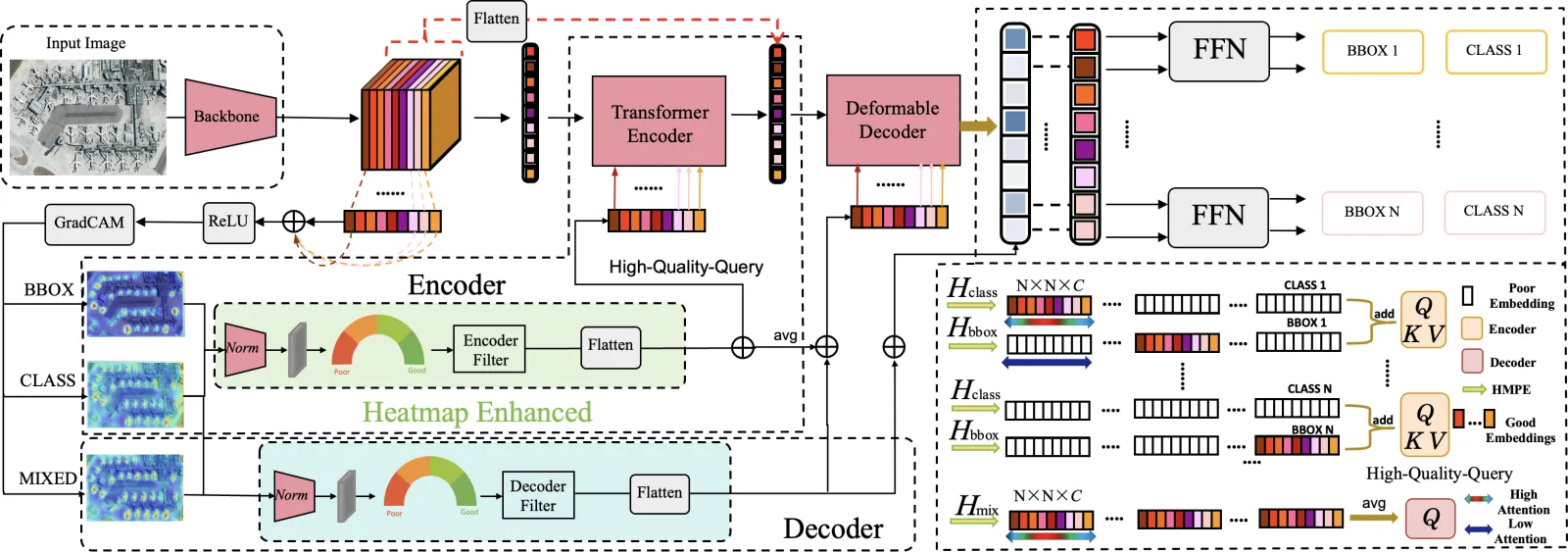
Figure for Learning Where to Embed

Abstract

Transformer-based detectors have advanced small-object detection, but they often remain inefficient and vulnerable to background-induced query noise. This work presents HELP, a noise-aware positional-semantic fusion framework that studies where to embed positional information by preserving positional cues in foreground-salient regions while suppressing background clutter. It introduces Heatmap-guided Positional Embedding for both encoder and decoder stages, combines it with a gradient-based mask filter for cleaner query retrieval, and integrates Linear-Snake Convolution to enrich retrieval-relevant representations. The result is a lighter detector that reduces decoder depth and parameters substantially while maintaining competitive accuracy under a reduced compute budget.

Latent Motion Profiling for Annotation-free Cardiac Phase Detection in Adult and Fetal Echocardiography Videos[MICCAI'25, Oral]

Yingyu Yang, Qianye Yang, Kangning Cui, Can Peng, Elena D'Alberti, Netzahualcoyotl Hernandez-Cruz, Olga Patey, Aris Papageorghiou, and Alison Noble

Top 2.1% Paper PDF (preprint) Preprint Code
BibTeX
@inproceedings{10.1007/978-3-032-05185-1_31,
  author = {Yang, Yingyu and
            Yang, Qianye and
            Cui, Kangning and
            Peng, Can and
            D'Alberti, Elena and
            Hernandez-Cruz, Netzahualcoyotl and
            Patey, Olga and
            Papageorghiou, Aris T. and
            Noble, J. Alison},
  title = {Latent Motion Profiling for Annotation-Free Cardiac Phase Detection in Adult and Fetal Echocardiography Videos},
  booktitle = {Medical Image Computing and Computer Assisted Intervention -- {MICCAI} 2025},
  editor = {Gee, James C. and
            Alexander, Daniel C. and
            Hong, Jaesung and
            Iglesias, Juan Eugenio and
            Sudre, Carole H. and
            Venkataraman, Archana and
            Golland, Polina and
            Kim, Jong Hyo and
            Park, Jinah},
  year = {2026},
  pages = {316--325},
  publisher = {Springer Nature Switzerland},
  address = {Cham},
  isbn = {978-3-032-05185-1},
  doi = {10.1007/978-3-032-05185-1_31},
  url = {https://doi.org/10.1007/978-3-032-05185-1_31},
}
Details
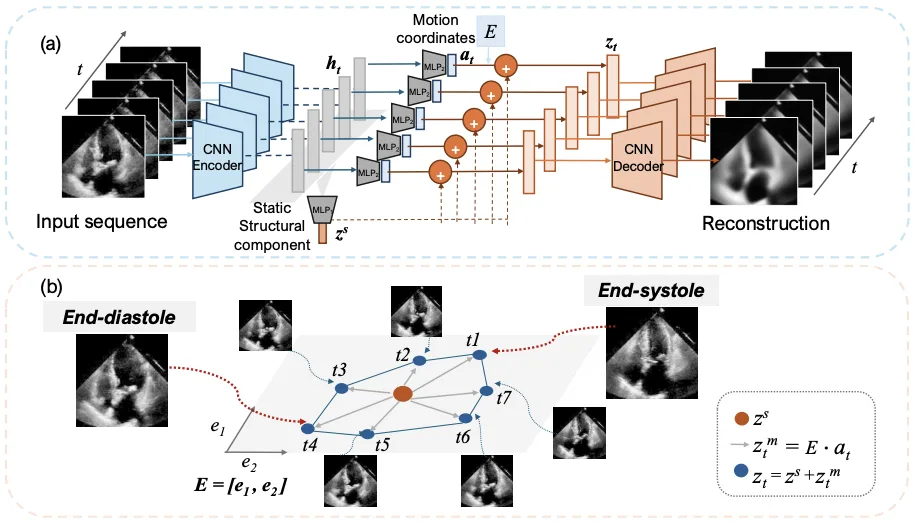
Figure for Yang et al., 2025

Abstract

The identification of cardiac phase is an essential step for analysis and diagnosis of cardiac function. Automatic methods, especially data-driven methods for cardiac phase detection, typically require extensive annotations, which is time-consuming and labour-intensive. In this paper, we present an unsupervised framework for end-diastole (ED) and end-systole (ES) detection through self-supervised learning of latent cardiac motion trajectories from 4-chamber-view echocardiography videos. Our method eliminates the need for manual annotations, including ED and ES indices, segmentation, or volumetric measurements, by training a reconstruction model to encode interpretable spatiotemporal motion patterns. Evaluated on the EchoNet-Dynamic benchmark, the approach achieves mean absolute error (MAE) of 3.0 frames (58.3 ms) for ED and 2.0 frames (38.8 ms) for ES detection, matching state-of-the-art supervised methods. Extended to fetal echocardiography, the model demonstrates robust performance with MAE 1.5 frames (20.7 ms) for ED and 1.7 frames (25.3 ms) for ES, despite the fact that the fetal heart model is built using non-standardized heart views due to fetal heart positioning variability. Our results demonstrate the potential of the proposed latent motion trajectory strategy for cardiac phase detection in adult and fetal echocardiography. This work advances unsupervised cardiac motion analysis, offering a scalable solution for clinical populations lacking annotated data. Code is released at https://github.com/YingyuYyy/CardiacPhase.

Detection and Geographic Localization of Natural Objects in the Wild: A Case Study on Palms[IJCAI'25, Oral]

Kangning Cui†,*, Rongkun Zhu†, Manqi Wang, Wei Tang, Gregory D. Larsen, Victor P. Pauca, Sarra Alqahtani, Fan Yang, David Segurado, David Lutz, Jean-Michel Morel, and Miles R. Silman

Paper PDF Preprint Poster Slides Code
BibTeX
@inproceedings{ijcai2025p1067,
  author = {Cui, Kangning and
            Zhu, Rongkun and
            Wang, Manqi and
            Tang, Wei and
            Larsen, Gregory D. and
            Pauca, Victor P. and
            Alqahtani, Sarra and
            Yang, Fan and
            Segurado, David and
            Lutz, David A. and
            Morel, Jean-Michel and
            Silman, Miles R.},
  title = {Detection and Geographic Localization of Natural Objects in the Wild: A Case Study on Palms},
  booktitle = {Proceedings of the Thirty-Fourth International Joint Conference on Artificial Intelligence, {IJCAI}-25},
  editor = {Kwok, James},
  year = {2025},
  pages = {9601--9609},
  publisher = {International Joint Conferences on Artificial Intelligence Organization},
  month = {August},
  doi = {10.24963/ijcai.2025/1067},
  url = {https://doi.org/10.24963/ijcai.2025/1067},
  note = {AI and Social Good},
}
Details
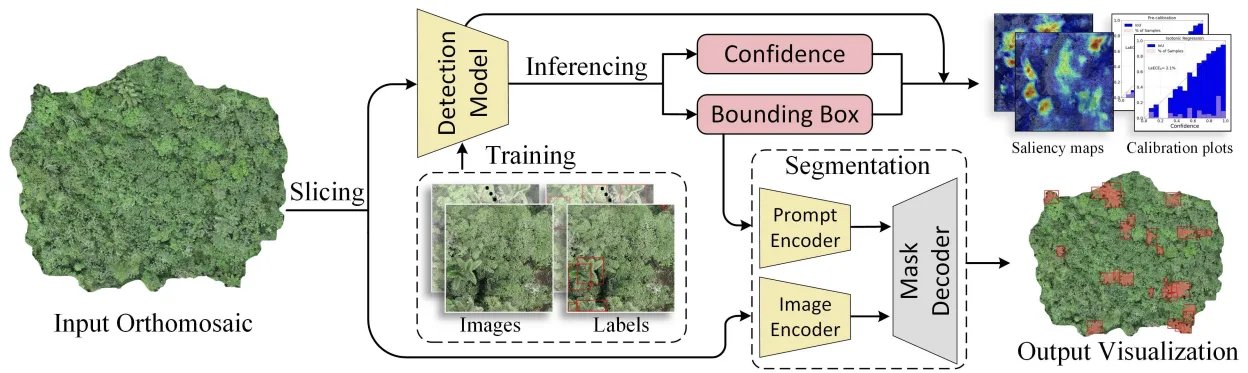
PRISM workflow: aerial forest imagery, palm detection, segmentation, and geographic mapping

Abstract

Palms are ecologically and economically indicators of tropical forest health, biodiversity, and human impact that support local economies and global forest product supply chains. While palm detection in plantations is well-studied, efforts to map naturally occurring palms in dense forests remain limited by overlapping crowns, uneven shading, and heterogeneous landscapes. We develop PRISM (Processing, Inference, Segmentation, and Mapping), a flexible pipeline for detecting and localizing palms in dense tropical forests using large orthomosaic images. Orthomosaics are created from thousands of aerial images and spanning several to hundreds of gigabytes. Our contributions are threefold. First, we construct a large UAV-derived orthomosaic dataset collected across 21 ecologically diverse sites in western Ecuador, annotated with 8,830 bounding boxes and 5,026 palm center points. Second, we evaluate multiple state-of-the-art object detectors based on efficiency and performance, integrating zero-shot SAM 2 as the segmentation backbone, and refining the results for precise geographic mapping. Third, we apply calibration methods to align confidence scores with IoU and explore saliency maps for feature explainability. Though optimized for palms, PRISM is adaptable for identifying other natural objects, such as eastern white pines. Future work will explore transfer learning for lower-resolution datasets (0.5–1m). Data and code can be found at github.com/Zippppo/PRISM.

Patents